


Mekong Delta Vietnam: All you must know before you go
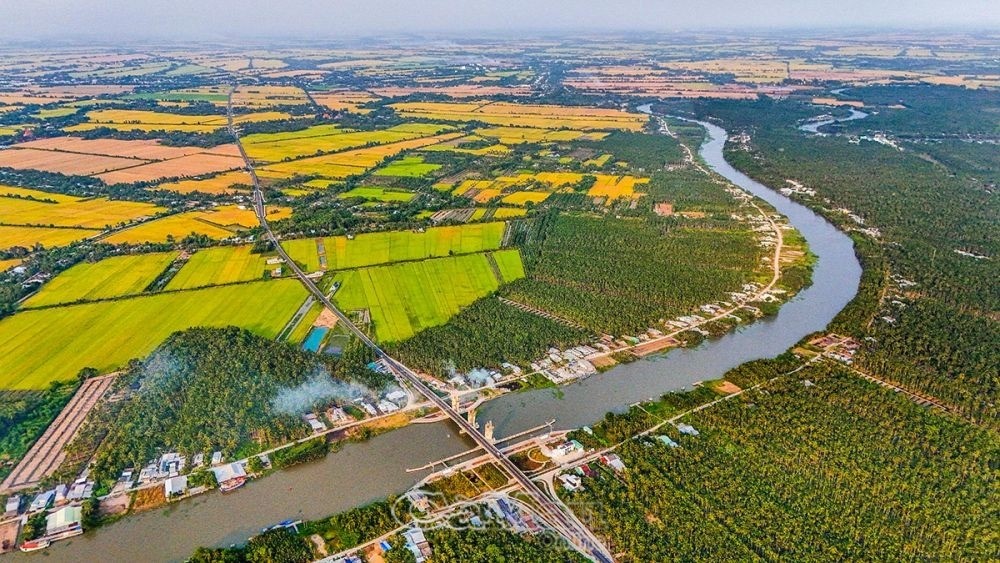
The Mekong Delta Vietnam’s “rice bowl,” is a land of rivers, floating markets, and lush fields, offering a true taste of Southern culture and nature. With Sinhcafe, visitors can enjoy a complete journey — from stunning natural landscapes and local dishes at reasonable prices to the simple lifestyle of the Mekong Delta people.
An overview of the Mekong Delta in Vietnam
Before starting your journey, let’s take a look at an overview of the Mekong Delta in Vietnam - a land closely connected to rivers, culture, and the people of Southwestern Vietnam.
Where is the Mekong Delta in Vietnam?
The Mekong Delta is located in the southernmost part of Vietnam, in the Southwest region. It spans 13 provinces and cities, including Long An, Tien Giang, Ben Tre, Vinh Long, Tra Vinh, Dong Thap, Hau Giang, Soc Trang, Bac Lieu, Ca Mau, Kien Giang, An Giang, and Can Tho City—the area’s largest economic and cultural hub.
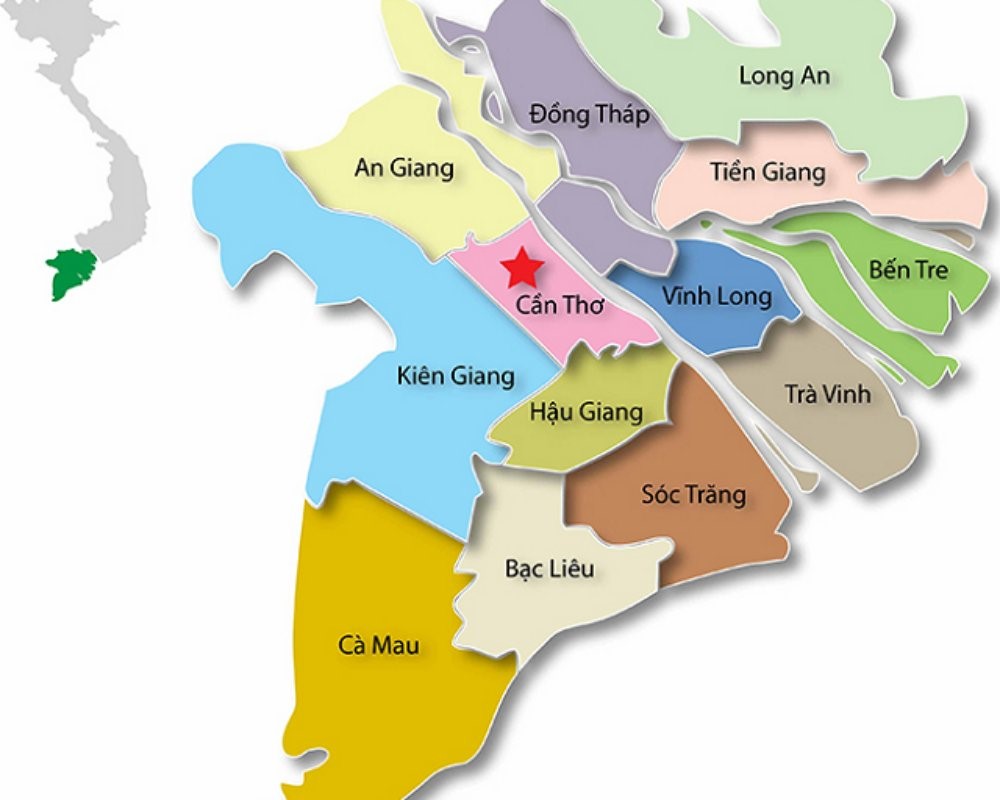
The Mekong Delta map Vietnam (Source: Collected)
Geographically, the delta borders Cambodia to the north, the East Sea to the east and southeast, and the Gulf of Thailand to the west and southwest. Thanks to this strategic location, the Mekong Delta is not only ideal for agriculture and aquaculture but also serves as a vital trade gateway connecting Vietnam with other Southeast Asian countries.
Natural Attractions of Mekong Delta
When visiting the Mekong Delta, travelers are immediately impressed by its unique waterways. A maze of rivers and canals invites you to hop on a small wooden boat, gliding through lush nipa palm forests.
Each season offers a different charm: during fruit season, you can stop at tropical orchards to taste freshly picked rambutan, durian, and mangosteen; in the flood season, the sight of blooming lotus fields and migrating birds creates a magical landscape found nowhere else.
Typical natural attractions in the Mekong Delta include: Tra Su Cajuput Forest (An Giang), Tram Chim National Park (Dong Thap), U Minh Ha National Park (Ca Mau),...
Culture and Local Life
The culture of the Mekong Delta is closely tied to its floating markets — an essential stop on any journey. Cai Rang Floating Market in Can Tho buzzes with boats from the early morning, offering visitors a lively glimpse into the vibrant river life.
In addition, Khmer temples in Tra Vinh and Soc Trang, as well as the Ba Chua Xu Festival at Sam Mountain (An Giang), carry both spiritual significance and showcase the unique local culture.
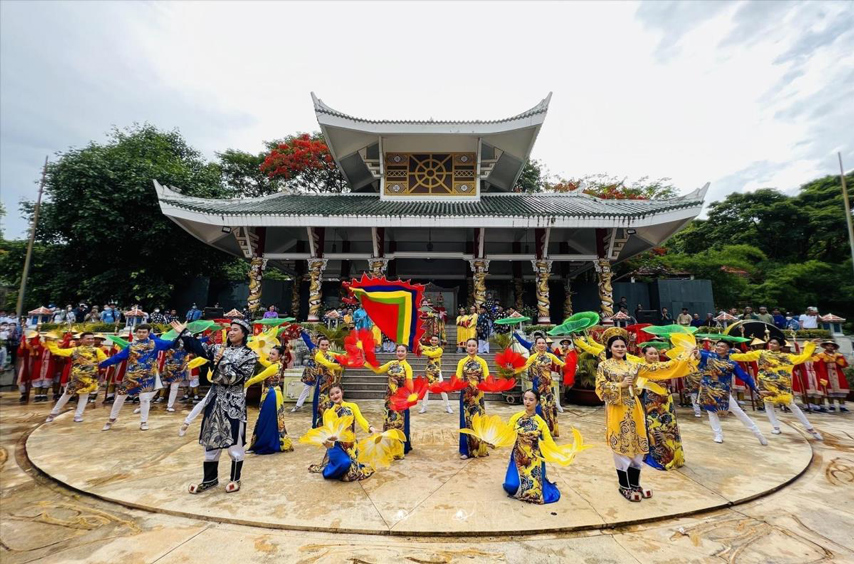
Ba Chua Xu Festival at Sam Mountain (Source: Collected)
When staying at a homestay, you’ll have the chance to cook with local farmers, go fishing, and enjoy Đờn ca tài tử — the folk music recognized by UNESCO - allowing you to experience more deeply the simplicity and warm hospitality of the Mekong Delta people.
Best time to visit the Mekong Delta
The Mekong Delta has a tropical monsoon climate with an average temperature of around 27–29°C and annual rainfall ranging from 1,300 to 2,000 mm. Thanks to this climate, visitors can travel here year-round, with each season offering its own unique experience:
From November to April – The Best Time to Visit
This is the most pleasant time of the year, with little rainfall, mild sunshine, and comfortable weather that makes traveling easy. Nature is at its most vibrant with golden rice fields, lush orchards, and tranquil rivers.
- Highlights activities: Visiting Cai Rang and Phong Dien floating markets, rowing sampans through narrow canals, cycling across peaceful villages, and staying in local homestays to enjoy authentic rural life.

Cycling across peaceful villages
- Festival: The Ba Chua Xu Festival in Chau Doc (held in the first lunar month), attracting thousands of pilgrims.
This is considered the best season to travel, thanks to the ease of moving around and the wide range of activities available.
From May to August – Paradise of Orchards
This is the rainy season, but rain showers usually come and go quickly, without disrupting your plans. In return, the Delta becomes more abundant than ever, as orchards are heavy with ripe fruits.
- Highlights activities: Exploring famous fruit gardens in Tien Giang, Vinh Long, and Ben Tre; tasting fresh rambutan, mangosteen, and durian right from the tree.
- Festival: The Southern Fruit Festival (held in the 6th lunar month) in Tien Giang and Binh Duong, where hundreds of tropical fruits are displayed.
Perfect for food lovers and those who want to immerse themselves in the vibrant colors of the orchards.
From September to November – A Unique Riverine Beauty
This is when water levels rise, creating a landscape unique to the Mekong Delta. Vast fields are submerged, lotus and water lilies bloom, and fish migrate back with the floodwaters, bringing abundance to the region.
- Highlights activities: Taking a boat trip through Tra Su Cajuput Forest (An Giang), enjoying the flooded forest scenery, photographing lotus fields in Dong Thap, and tasting seasonal specialties like linh fish and dien dien flowers.
- Festival: The Ooc-om-bok Festival (October in the lunar calendar) of the Khmer community, featuring vibrant and exciting Ngo boat races.
This is an ideal season for those who want to explore the wild beauty of the Delta and experience its rich local culture.
Each period in the Mekong Delta has its own charm. From November to April is the most ideal time to visit thanks to pleasant weather and diverse outdoor activities. Still, from May to August with its abundant fruit orchards, and from September to November with its unique flooding landscapes, also promise memorable and authentic experiences worth trying at least once.
Top must-visit destinations for your Mekong Delta visit
Exploring the Mekong Delta is a journey into the harmonious blend of nature, culture, and people. Below is a curated list of must-visit destinations to ensure you don’t miss the most unique experiences this region has to offer.
Cai Rang Floating Market (Can Tho)
Begin your journey of discovery at Cai Rang Floating Market – one of the largest and busiest river markets in the Mekong Delta. Picture the lively scene at dawn as hundreds of boats gather, loaded with ripe tropical fruits, fresh produce, and regional specialties.
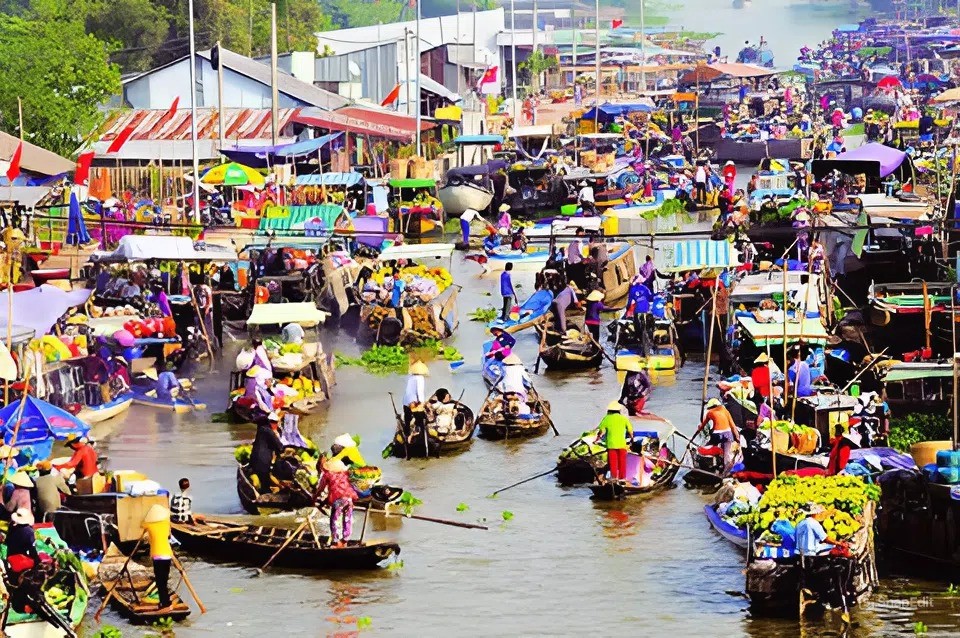
Cai Rang Floating Market
Don’t miss the chance to sit on a motorized sampan, weaving through the market while savoring a hot bowl of hu tieu or bun rieu and sipping strong local coffee – a riverside culinary culture you won’t easily find anywhere else.
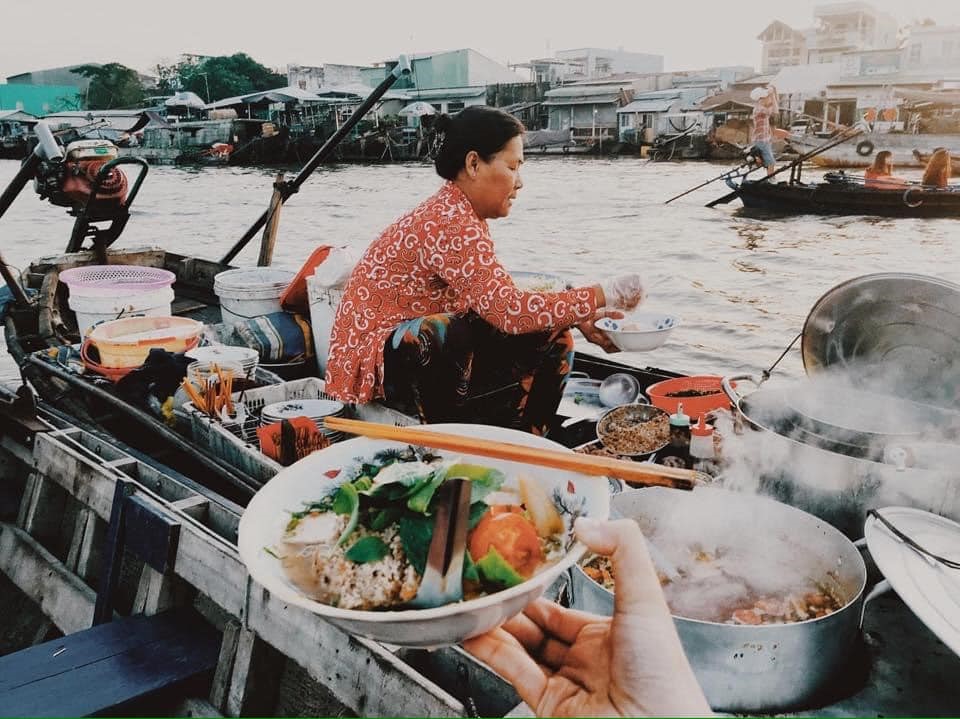
Enjoy a bowl of bun rieu at Cai Rang Floating Market (Source: Collected)
Tra Su Cajuput Forest (An Giang)
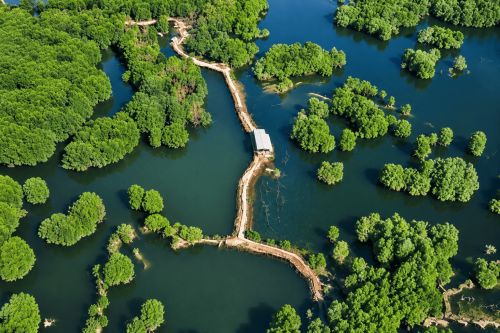
Leaving behind the bustle, Tra Su Cajuput Forest is the perfect place to reconnect with nature. Nicknamed a “green ecological museum,” it offers a serene and refreshing landscape. Visitors can paddle through narrow canals under the forest canopy and admire a rich ecosystem that is home to rare storks, herons, and other bird species.
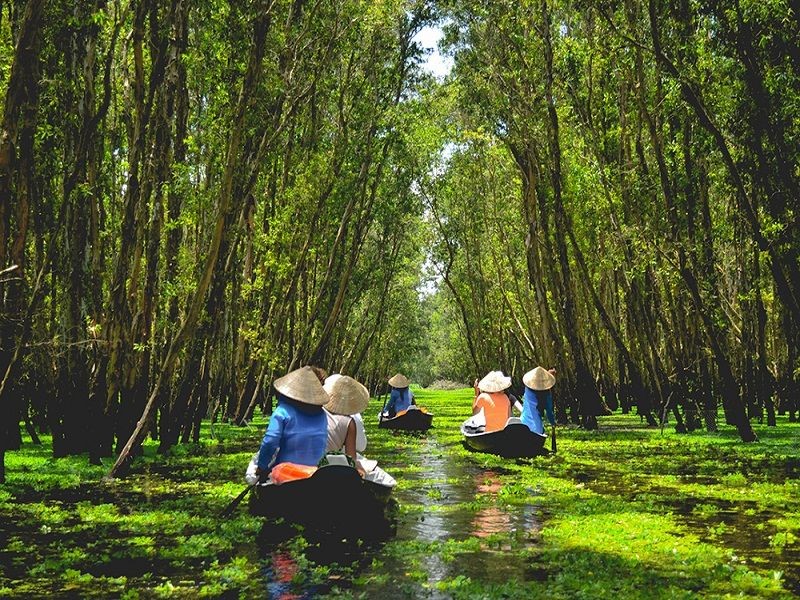
Explore Tra Su Cajuput Forest (Source: Collected)
Especially during the flood season (September to November), the waterways are carpeted with water hyacinths, creating a dreamlike watercolor painting. It’s not only an amazing spot for photography but also a meditative experience in the heart of nature.
Tram Chim National Park (Dong Thap)
Recognized as Vietnam’s fourth Ramsar site and the 2,000th in the world, Tram Chim National Park is a must-visit for eco-tourism and wildlife lovers. The park boasts a rich variety of flora and fauna and is a vital sanctuary for hundreds of waterbird species, including the rare Sarus Crane (most often seen between December and May).
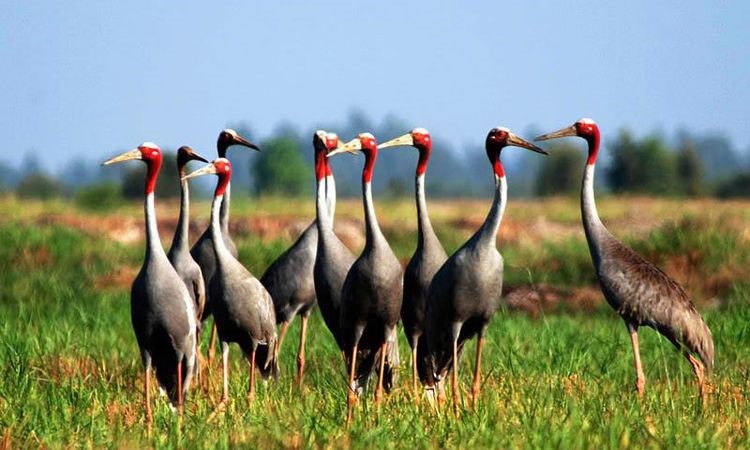
Tram Chim National Park is home to the Sarus Crane (Source: Collected)
Travelers can explore by motorboat, watch flocks of birds soaring overhead, or try paddling themselves through the flooded cajuput forests. Each season brings a new face to Tram Chim, offering visitors fresh and unforgettable experiences.
Ben Tre – The Coconut Kingdom
In Ben Tre, visitors are welcomed into a peaceful landscape of endless coconut groves and lush fruit gardens. A highly recommended experience is paddling a sampan through the crisscrossing waterways, visiting traditional coconut candy workshops, and tasting freshly picked tropical fruits right at the garden.
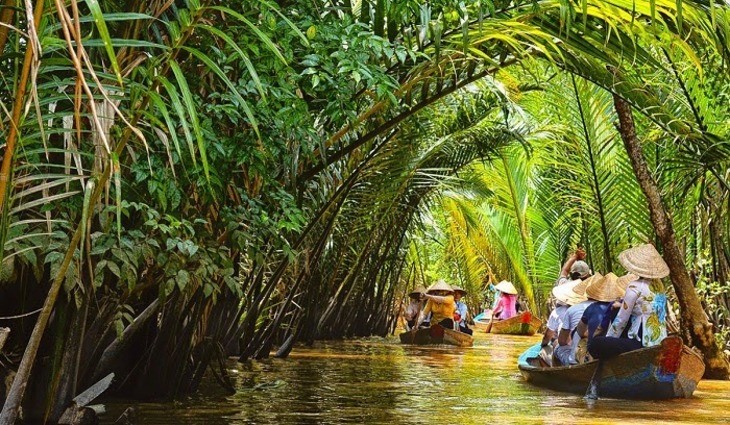
Ben Tre - The Coconut Kingdom
In the afternoon, enjoy the melodies of don ca tai tu – a UNESCO-recognized folk music form – to truly feel the simplicity, warmth, and hospitality of the locals.
Cape Ca Mau (Ca Mau Province)
Ca Mau Cape is a unique destination marking the southernmost point of Vietnam, a place many travelers dream of reaching. Standing at the national coordinate monument, you can witness the rare sight of the East Sea and the West Sea meeting – a truly unforgettable moment.
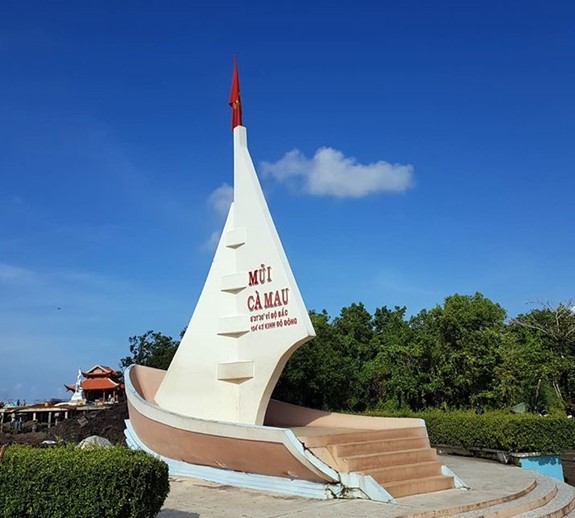
Cape Ca Mau (Source: Collected)
Beyond its symbolic significance, the cape is surrounded by vast mangrove forests that shelter diverse wildlife. A trip here not only stirs national pride but also offers an encounter with pristine nature, leaving a lasting memory on your Mekong Delta journey.
Sam Mountain (Chau Doc, An Giang)
Sam Mountain harmoniously combines majestic natural scenery with important cultural and spiritual sites. Pilgrims and visitors alike come to pay their respects at Ba Chua Xu Temple – one of the most sacred temples in Southern Vietnam – to pray for peace and prosperity.
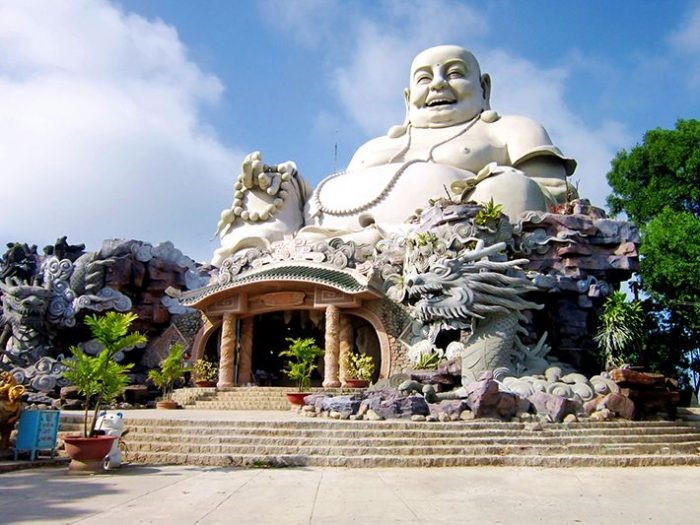
Sam Mountain (Source: Collected)
You can also explore the historic Tay An Pagoda and the tomb of Thoai Ngoc Hau. Hiking up Sam Mountain rewards you with panoramic views of vast rice fields and the Cambodian border in the distance, especially breathtaking at sunset.
Phu Quoc National Park (Kien Giang)
Beyond its famous beaches, Phu Quoc Island also captivates visitors with Phu Quoc National Park, a UNESCO-recognized biosphere reserve with remarkable biodiversity. This is the ideal destination for trekking through tropical forests, discovering natural waterfalls, and observing a wide range of flora and fauna.
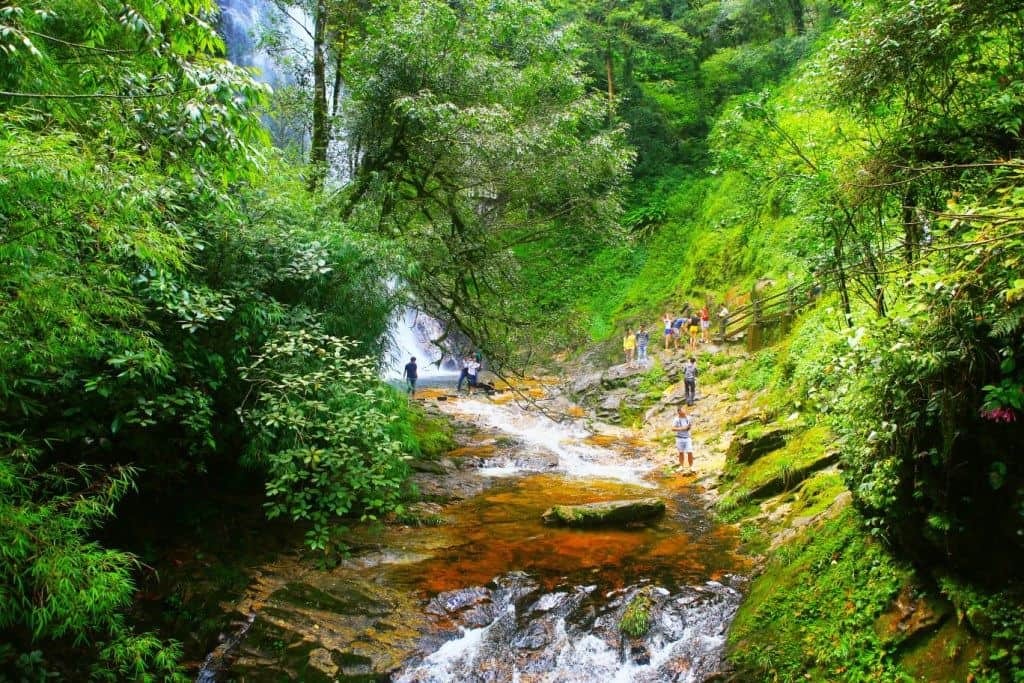
Phu Quoc National Park - one of the best natural wonders (Source: Collected)
After exploring the jungle, relax on pristine beaches inside the park or go snorkeling in nearby coral-rich waters. A trip to Phu Quoc that blends forest adventure with seaside leisure will undoubtedly leave you with unforgettable memories.
Read more: Tra Su Cajuput Forest Vietnam: Abandoned amid a verdant paradise
Delicious Local Foods to Try in the Mekong Delta
Exploring the Mekong Delta without trying its cuisine would be a huge miss — the region’s signature flavors are not only diverse but also reflect the riverine lifestyle, rural culture, and the warm hospitality of its people.
Fermented Fish Hotpot
Considered one of the most iconic dishes of the Mekong Delta, this hotpot features a rich broth made from fermented fish such as linh fish or sac fish, paired with a wide variety of local vegetables, fresh fish, and seafood. While the smell may seem strong at first, the combination of savory, sweet, sour, and spicy flavors makes it incredibly addictive once you try it.
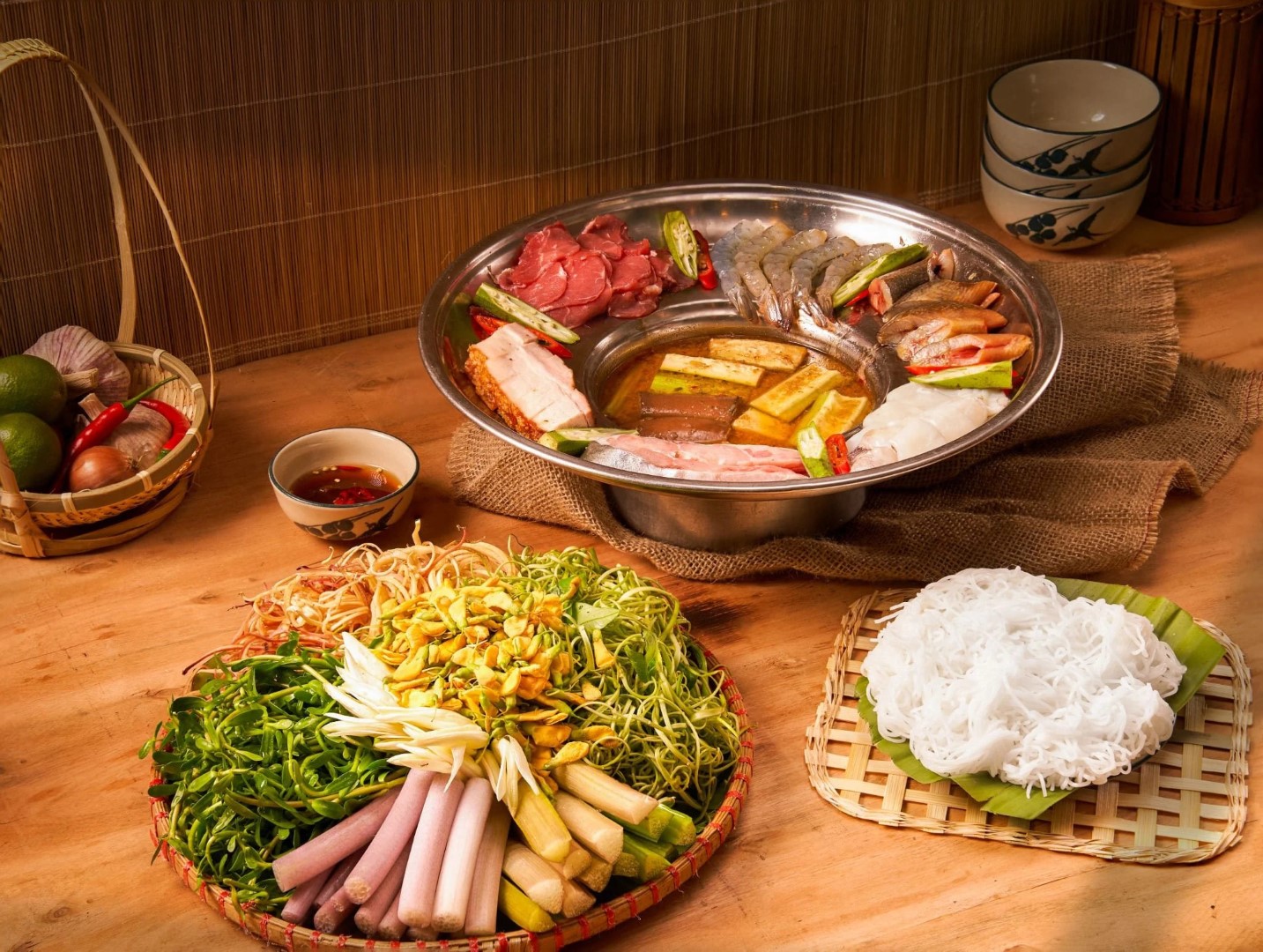
Fermented Fish Hotpot - Rich flavors of Mekong Delta Vietnam
Mekong-Style Banh Xeo – Crispy and Flavorful
Unlike banh xeo in other regions, the Mekong version is often larger, with a thin and crispy golden crust. Its filling of river shrimp, pork, and bean sprouts creates a unique taste. Typically served with fresh herbs and dipped in sweet-and-sour fish sauce, it’s a delightful mix of textures and flavors.
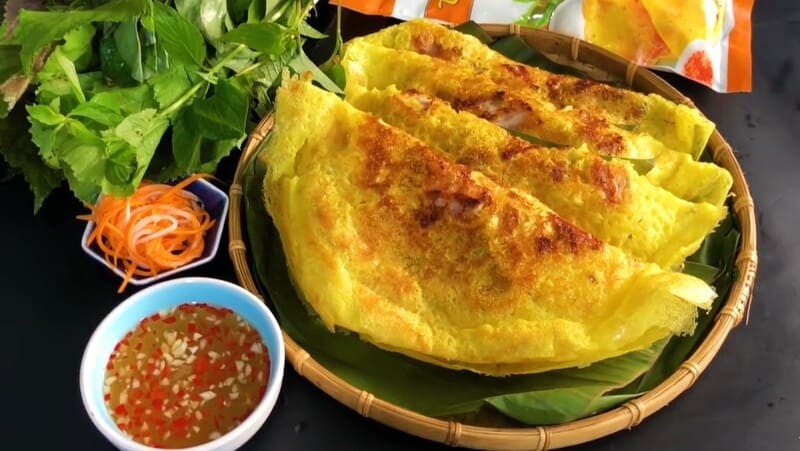
Mekong Delta Style Banh Xeo
Bun Nuoc Leo – A Khmer-Inspired Dish
Bún nước lèo is deeply rooted in Khmer culture, especially in Trà Vinh and Sóc Trăng. Its broth is made from fermented bò hóc fish, but the taste is not overpowering, enhanced with lemongrass, turmeric, snakehead fish, and fresh shrimp. The dish is completed with roasted pork, fresh herbs, and bean sprouts, offering a bold yet balanced flavor that wins over even the pickiest eaters.

Bun Nuoc Leo
Sour Fish Soup – A Regional Dish
With the Delta’s hot and humid climate, sour fish soup is a household favorite. Fresh fish such as basa, snakehead, or catfish is cooked with tamarind, pineapple, tomato, okra, elephant ear stems, and rice paddy herbs. The result is a light, tangy broth with natural sweetness from the fish, perfect for cooling down and pairing with rice or noodles.
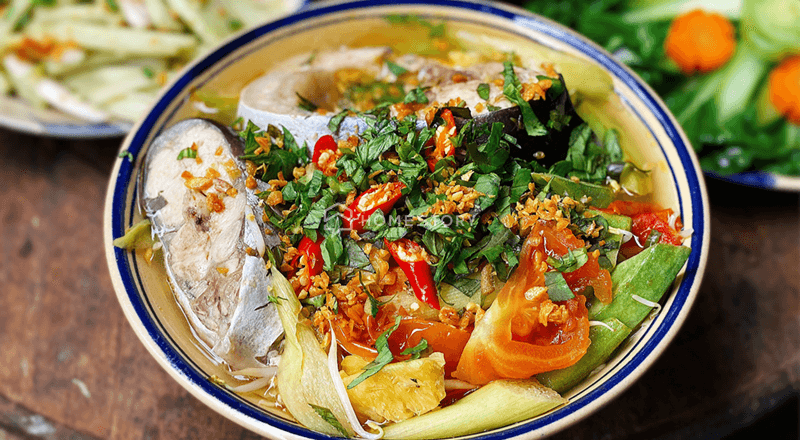
Sour Fish Soup - A Regional Dish
Caramelized Fish in Clay Pot
One of the most familiar comfort foods in the Delta, this dish features fish like basa or snakehead slow-braised in a clay pot with fish sauce, caramelized sugar, and pepper. The slow cooking allows the flavors to seep into the fish, creating a savory-sweet balance with a firm texture. Served with hot steamed rice and pickled vegetables, Caramelized Fish offers a distinctive flavor.
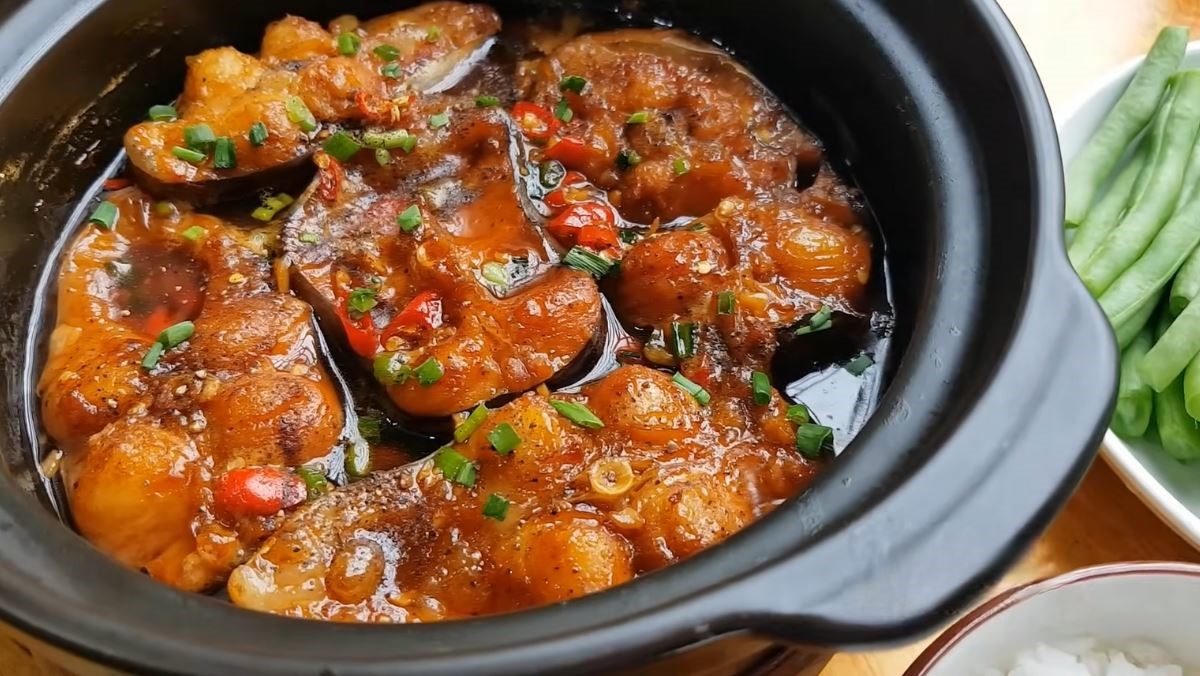
Caramelized Fish in Clay Pot
Banh Pia – The Famous Sweet Treat
For those seeking a special gift, Bánh Pía is the perfect choice. Its soft, multi-layered pastry encases a rich filling of mung beans, durian, and salted egg yolk, offering a creamy, fragrant sweetness. More than just a local specialty, bánh pía has become a culinary symbol of the Mekong Delta, loved by both domestic and international travelers.
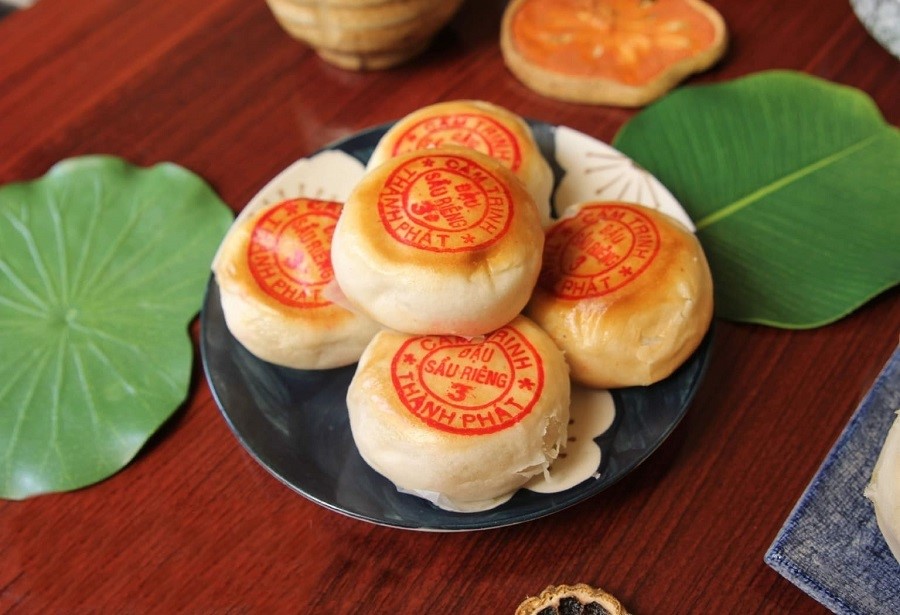
Banh Pia - The Famous Sweet Treat
Is Mekong Delta worth visiting?
Many travelers often wonder if the Mekong Delta is still worth adding to their Vietnam itinerary. The answer is definitely yes. The Mekong Delta is not only one of Vietnam’s most fertile regions but also a land full of unique charms that every traveler should experience at least once.
Warm and hospitable people
The greatest appeal of the Mekong Delta lies in its people. Visitors are welcomed with genuine smiles, kindness, and generosity. Sharing everyday stories over a cup of tea, enjoying a simple homemade meal, or paddling a boat with a local host brings an unforgettable sense of warmth and connection.
Unique riverine landscapes
Nowhere else in Vietnam offers such an extensive network of rivers and canals. From endless rice fields and lush fruit orchards to melaleuca forests, mangroves, and the vast seascape of Ca Mau, the Mekong Delta paints a picture of nature that is both pristine and captivating.
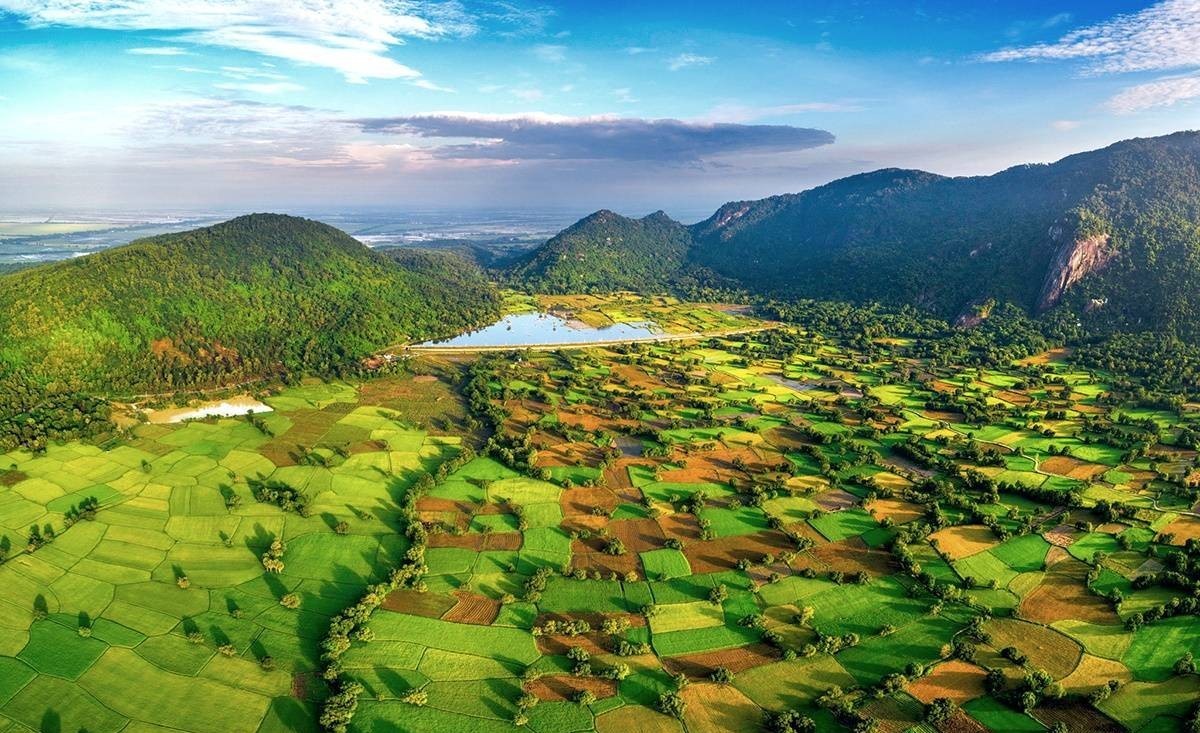
Unique riverine landscape (Source: Collected)
Distinctive water-based culture
The Mekong Delta preserves many long-standing cultural traditions, the most iconic being its floating markets—an extraordinary way of life on the river. In addition, Southern folk music (Đờn ca tài tử)—recognized as UNESCO Intangible Cultural Heritage—offers travelers a true taste of the region’s cultural soul.
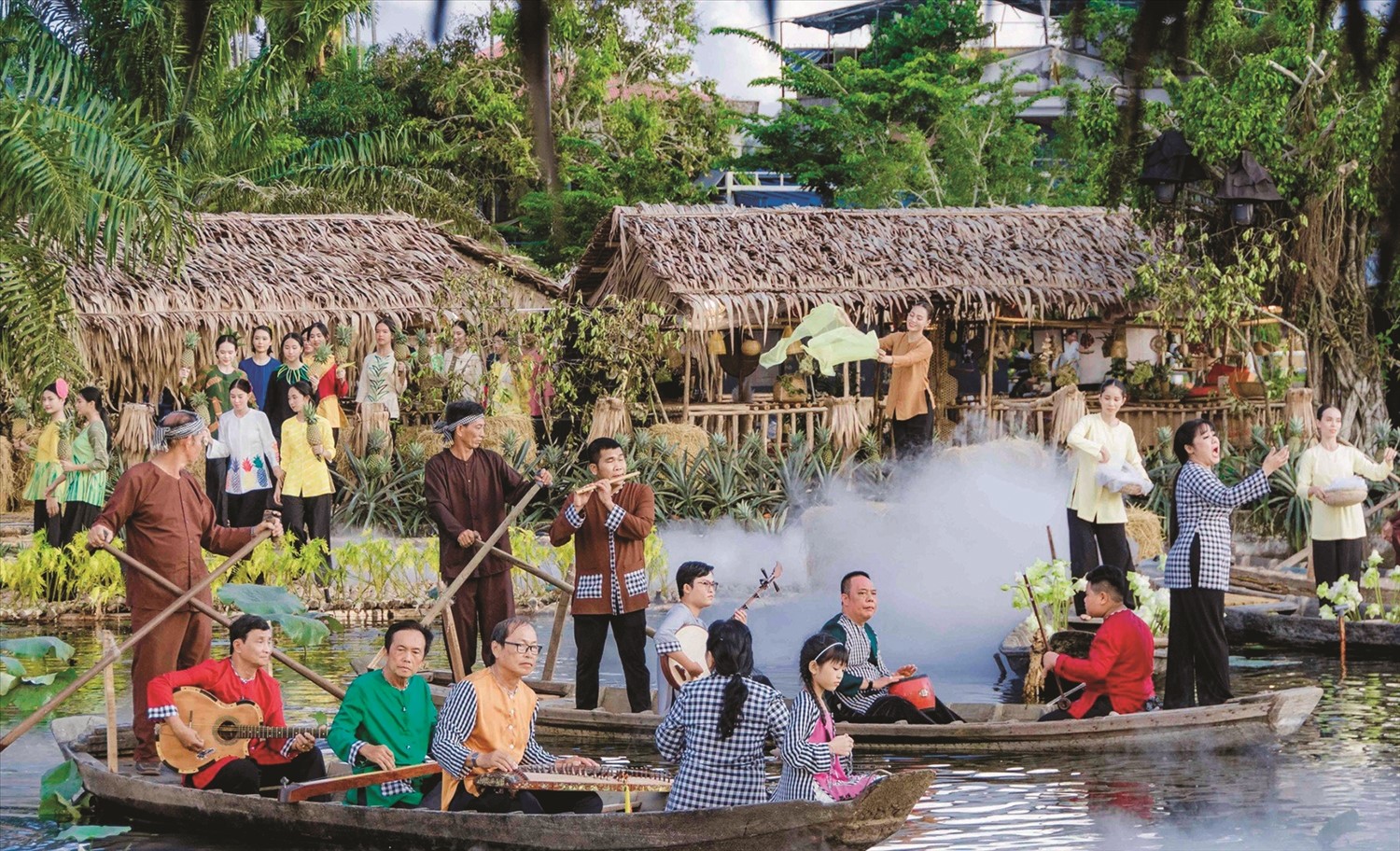
Southern folk music (Don Ca Tai Tu)
Rich and authentic cuisine
No journey through the Mekong Delta is complete without indulging in its cuisine. From a steaming bowl of hu tieu or bun rieu enjoyed on a boat, to rustic specialties like grilled snakehead fish, fermented fish hotpot, crispy southern pancakes, and freshly picked tropical fruits—every dish bursts with freshness and authenticity.
Affordable yet diverse experiences
Another highlight of the Mekong Delta is its excellent value for travelers. From cozy riverside homestays to luxurious resorts, from simple home-cooked meals to lavish seafood feasts—options are available for every budget. With just a reasonable cost, visitors can enjoy a fulfilling journey filled with authentic and memorable experiences.
Clearly, the Mekong Delta is worth visiting. If you have limited time, a great option is to join a Mekong Delta tour 1 day, where you can row through coconut waterways, visit local workshops, taste tropical fruits, and enjoy traditional Southern folk music—all in a single trip.
Frequently asked questions about the Mekong Delta
Visiting the Mekong Delta Vietnam is always an exciting experience, but many travelers still have practical concerns before their trip. To help you prepare better, here are some of the most frequently asked questions and useful tips to make your journey more enjoyable.
How to get to Mekong Delta from Ho Chi Minh City?
The Mekong Delta is located just a few hours away from Ho Chi Minh City, making it a convenient destination for both day trips and longer journeys. The most common way to travel is by bus, with many operators offering routes to Can Tho, My Tho, or Ben Tre. Travel time usually takes from 2 to 4 hours depending on the destination.
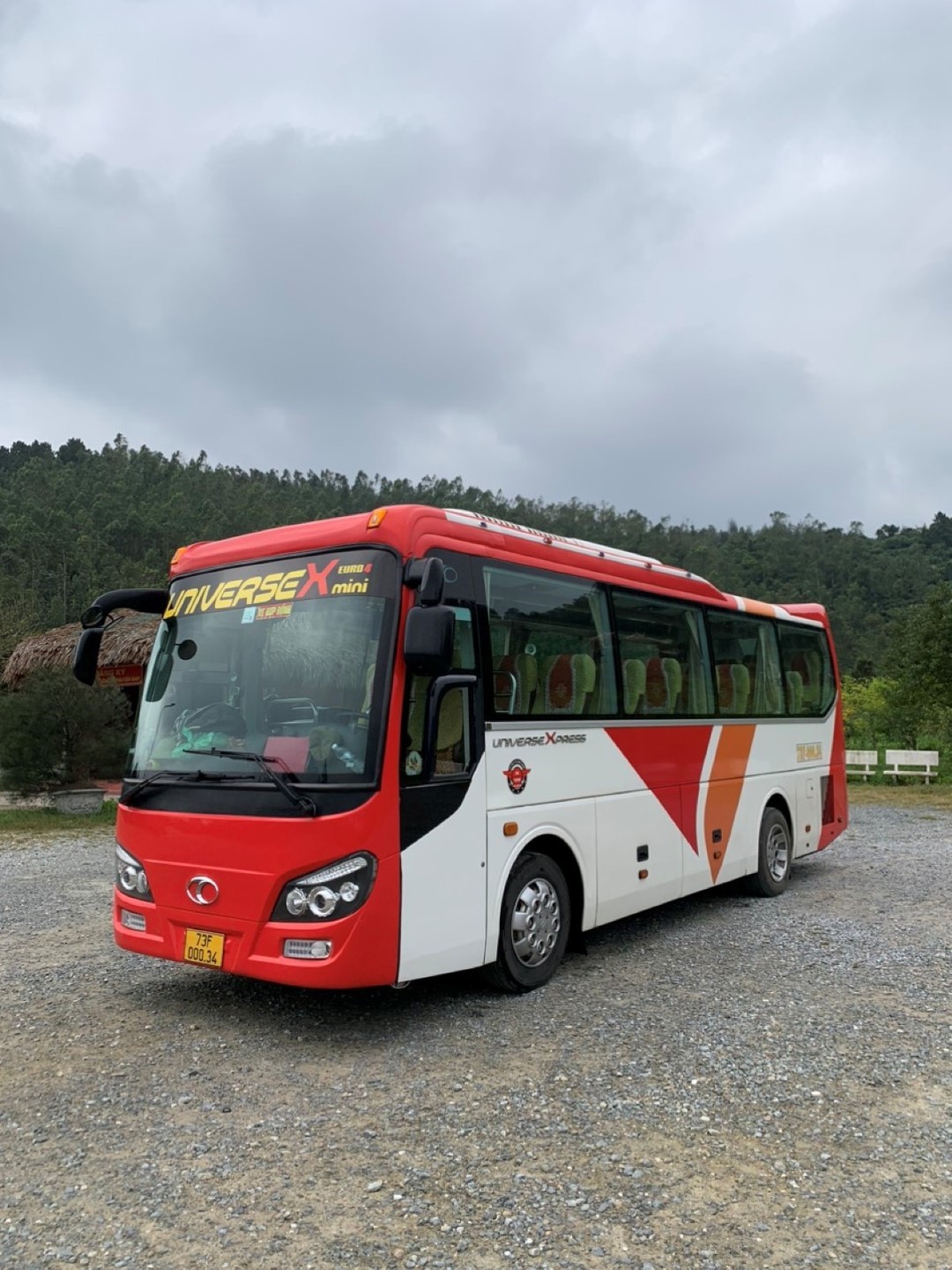
Travel to Mekong Delta by bus
If you prefer comfort, private cars and taxis are available, offering more flexibility and convenience. For a unique experience, you can also join guided tours that include boat rides. Although there are no direct flights to most towns in the delta, Can Tho does have an airport with connections to major cities in Vietnam.
What to wear in Mekong Delta?
The Vietnam Mekong Delta has a tropical climate, with hot and humid weather most of the year. Lightweight and breathable clothes are highly recommended, especially cotton shirts, shorts, and comfortable footwear for walking or boat trips. A wide-brimmed hat, sunglasses, and sunscreen will help protect you from the sun.
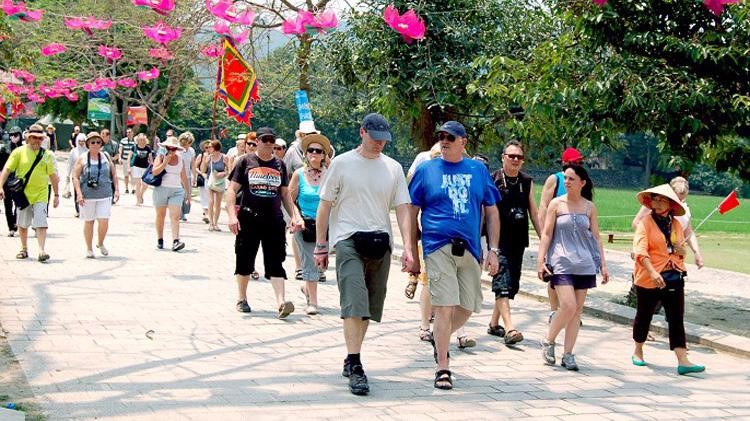
Traveler outfit ideas for Mekong Delta Vietnam
If you are visiting temples or spiritual sites such as Sam Mountain or pagodas, it is important to dress respectfully by covering your shoulders and knees. This applies to both men and women to show cultural sensitivity.
During the rainy season (May to October), a light raincoat or umbrella is also useful. Practical clothing will not only keep you comfortable but also ensure you are well-prepared for different activities across the Mekong Delta map Vietnam.
Read more: Chau Doc floating village: A wonderful place in An Giang for visiting
The Mekong Delta Vietnam is more than just a destination—it’s an experience that brings together breathtaking landscapes, unique culture, and warm hospitality. Whether you’re looking at the map of Mekong Delta to plan your journey, wondering where the Mekong Delta is in Vietnam, or asking yourself if the Mekong Delta is worth visiting, the answer is always a resounding yes.
With Sinhcafe, your trip to the Mekong Delta in Vietnam will be unforgettable. From vibrant floating markets to serene countryside views, we make sure you don’t miss a thing.
Call our hotline 090 4488 850 or 024 3756 8868 today to book your Mekong Delta adventure. Your memorable journey through the heart of Southern Vietnam starts here!
Share via




Related articles
Vung Tau port: Discover the bustling port life and exciting activities
Blog | 20/08/2025
Phát Diệm cathedral: Discover the Majestic Phat Diem Stone Cathedral in Ninh Binh
Blog | 30/12/2025
Nha Trang Cathedral: The Gothic Soul Anchored in the Heart of the Coastal Pearl
Blog | 30/12/2025

Vietnam’s Hidden Jungle Paradise Cuc Phuong National Park
Blog | 30/12/2025



There are no reviews yet